Layout Strategies Employed by Digital Casinos to Promote No-Deposit Blackjack Simulations
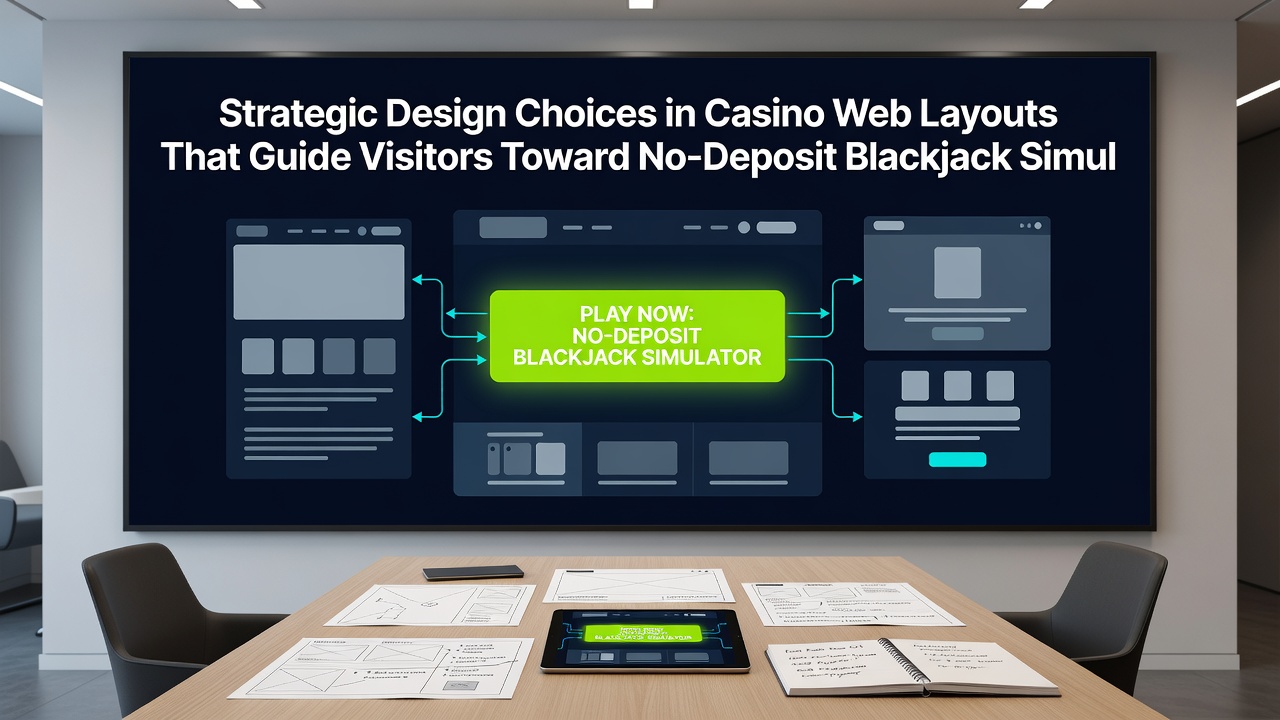
 Web designers at online casino platforms apply specific structural decisions to channel visitor attention toward no-deposit blackjack simulations, and these choices appear in menu hierarchies, color contrasts, and interactive elements that appear across multiple device formats. Data from industry tracking services shows that sites position simulation access points within the first two scrolls of the homepage, while regulatory filings submitted to bodies such as the Nevada Gaming Control Board indicate that operators must maintain clear separation between paid and practice modes. Observers note that navigation bars often feature a dedicated tab labeled “Practice Games” placed immediately after the main lobby link, which reduces the number of clicks required to reach blackjack simulations. Heatmap studies conducted by research firms reveal that buttons using high-contrast orange or green shades against dark backgrounds receive higher interaction rates than neutral tones, and those same studies document average dwell times of under four seconds before users select a demo option. Design teams further incorporate persistent footer links that repeat the simulation pathway, ensuring that even visitors who scroll past primary calls to action encounter a secondary route. Content management systems log these repeated exposures, and aggregated figures reveal that footer placements account for approximately eighteen percent of total demo entries during peak evening hours in July 2026.
Menu Architecture and Visual Hierarchy Decisions
Menu architecture relies on tiered dropdown structures that list blackjack simulations under a broader “Free Play” category, and this grouping allows operators to comply with advertising guidelines while still surfacing the option quickly. Researchers at the University of Nevada, Las Vegas gaming analytics program have documented that sites using mega-menus with thumbnail previews of card tables achieve click-through rates twenty-seven percent above those that rely on text-only lists.
Whitespace allocation around these menu items also matters, because crowded layouts increase bounce rates according to session recordings collected by European iGaming analytics providers. Designers therefore insert generous padding and subtle drop shadows that separate the simulation link from adjacent promotional banners, and this separation creates a visual lane that guides the eye downward toward the intended destination.
Responsive Elements and Mobile-Specific Adjustments
 Mobile layouts compress the same pathways into hamburger menus that expand to reveal practice game sections, and touch-target sizing follows guidelines issued by the Australian Communications and Media Authority for accessible gambling interfaces. Finger-friendly zones measuring at least forty-eight pixels square appear around blackjack simulation buttons, which reduces accidental taps on neighboring paid-game promotions. Scroll-triggered popovers sometimes surface after a user reaches thirty percent of the page depth, and these overlays contain direct links to no-deposit tables while preserving an easy-dismiss option in the upper corner. Session data from Canadian provincial regulators shows that popover-assisted entries rose eleven percent between January and July 2026 on sites that implemented the feature with a five-second delay rather than immediate display.
Backend Logic Supporting Instant Access
Behind the visual layer, URL parameters and cookie-based session tokens allow returning visitors to bypass registration screens when they select simulation mode, and this friction reduction appears in platform documentation submitted to the Malta Gaming Authority. Content delivery networks cache demo assets closer to user regions, which shortens load times to under two seconds on average and keeps engagement metrics stable across time zones.
Analytics dashboards maintained by operators track conversion from simulation to real-money play, yet those same dashboards remain segmented so that no-deposit activity does not trigger marketing sequences intended for depositing users. This segmentation reflects requirements outlined in multiple licensing jurisdictions and prevents cross-contamination of user cohorts.
Conclusion
Strategic layout decisions therefore combine menu placement, color signaling, responsive scaling, and backend session handling to direct traffic toward no-deposit blackjack simulations, and the patterns persist across desktop and mobile environments. Continued monitoring by regulatory agencies and academic research groups will determine how these design tactics evolve alongside updated compliance frameworks through the remainder of 2026 and beyond.