Card Table Pathways: Backend Logic Behind Instant Demo Access in Browser Gaming Hubs
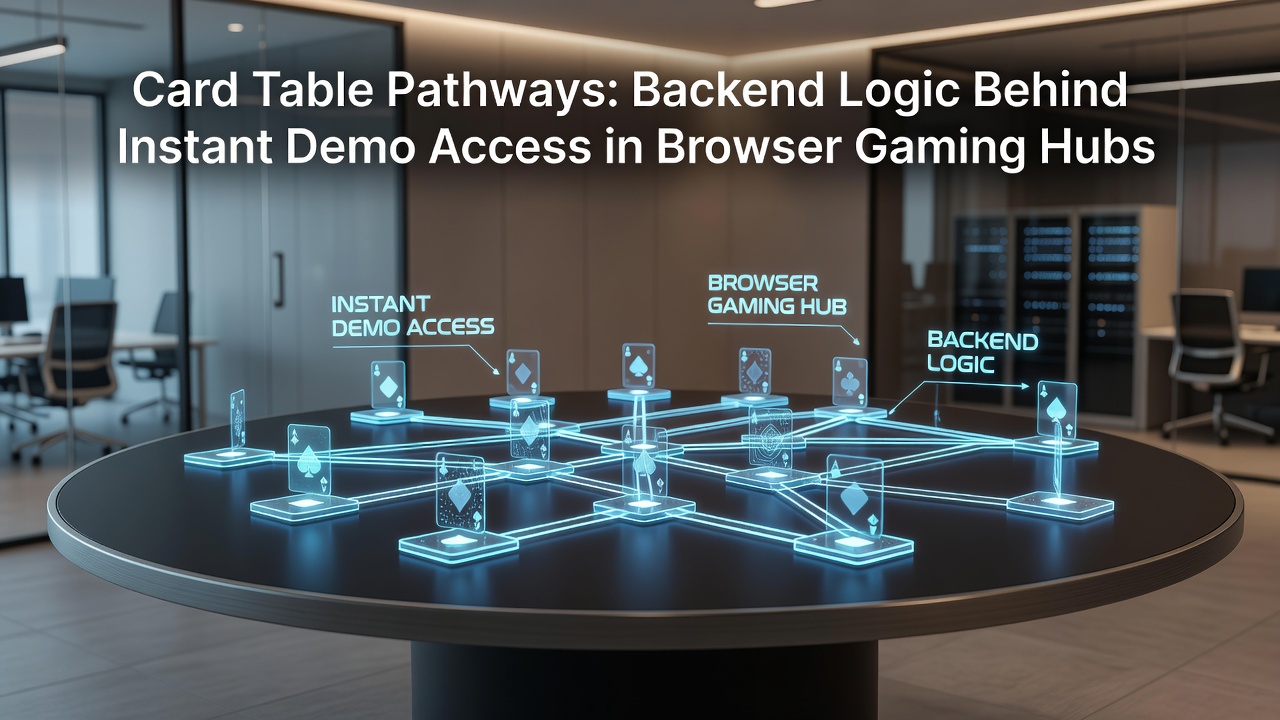
Browser gaming hubs rely on layered server architectures to deliver instant demo access to card tables, and these systems process user requests through predefined routing sequences that bypass traditional registration flows. Data from platform operators shows that demo sessions activate via lightweight API calls which initialize temporary game states without persisting player profiles.
Core Routing Mechanisms in Demo Environments
Backend logic begins when a browser sends a request to a specific endpoint, often structured as a hashed URL parameter that maps directly to a demo blackjack table instance. Engineers configure these pathways using load balancers that distribute traffic across microservices responsible for game logic, state management, and asset delivery. In June 2026 industry reports indicated that such routing reduced average load times to under 800 milliseconds on major hubs.
Session tokens generate on the fly through cryptographic functions that tie each demo interaction to a unique identifier, allowing the system to track card sequences and betting simulations without storing personal data. Observers note that this approach aligns with standards set by organizations such as Gaming Laboratories International, which publishes technical frameworks for randomized game outcomes.
Database and State Management Layers
Relational databases handle the core card table data, storing pre-shuffled decks and rule variants that populate instantly upon route resolution. NoSQL components manage real-time updates during play, pushing changes via WebSocket connections that keep the browser interface synchronized. Researchers at institutions like the University of Nevada, Las Vegas have documented how these hybrid storage models support high concurrency while maintaining deterministic demo results.
Cache layers sit between the application servers and databases to serve frequently accessed assets such as card images and table layouts, and this setup prevents redundant queries during peak traffic periods. Figures from North American operators reveal that effective caching contributes to session stability rates exceeding 99.2 percent across distributed nodes.
Security Protocols and Compliance Pathways
Encryption protocols wrap all data exchanges between the browser and backend services, using TLS 1.3 standards to protect even non-monetary demo transactions. Access controls enforce rate limiting on demo endpoints, which prevents abuse while permitting seamless entry for legitimate users. According to guidelines from the Australian Communications and Media Authority, operators must log these interactions for audit trails that verify fair play mechanics.
Integration with regulatory reporting tools occurs at the middleware level, where demo activity feeds into compliance dashboards without exposing underlying user sessions. Those who manage large-scale platforms often implement separate compliance modules that isolate demo pathways from any real-money processing environments.

Scalability Considerations in High-Traffic Hubs
Container orchestration platforms such as Kubernetes manage the deployment of game instances, spinning up additional demo tables when request volumes spike. Auto-scaling rules trigger based on metrics like concurrent sessions and CPU utilization, ensuring pathways remain responsive. Evidence from European operators shows that these configurations handled simultaneous demo accesses numbering in the tens of thousands during major promotional events.
Content delivery networks accelerate the distribution of static assets tied to card tables, while dynamic content routes through origin servers optimized for low-latency responses. What's interesting is how these networks integrate with backend logic to prefetch common table configurations, cutting initialization steps for repeat visitors.
Conclusion
Backend pathways for instant demo access combine routing intelligence, state management, and security layers into cohesive systems that support browser-based card table experiences. Continued refinements in June 2026 and beyond reflect ongoing adjustments to handle growing user volumes while meeting technical and regulatory benchmarks from multiple jurisdictions.