Browser Session Persistence Mechanisms and Their Effects on Instant Demo Access in Digital Casino Platforms

Browser session persistence refers to the storage of user data within a web browser across multiple page loads and visits, and this capability directly shapes how quickly individuals reach practice card simulations on virtual gaming platforms. Session data stored through mechanisms such as cookies, sessionStorage, and localStorage allows platforms to retain login states, game preferences, and navigation history without requiring repeated authentication steps each time a user returns.
Core Technical Components of Session Persistence
Web browsers maintain session continuity through several standardized APIs that developers implement to reduce friction during user interactions. SessionStorage holds information only for the duration of a single tab session while localStorage retains data until manually cleared or storage limits are reached. Cookies serve as another layer that transmits small packets of information between client and server on each request, enabling platforms to recognize returning visitors and preload relevant demo environments for card games. These tools operate together so that once a user selects a practice mode, the system recalls that choice on subsequent visits and routes the individual straight to the simulation interface without additional menu navigation.
Influence on Entry Speed for Practice Simulations
Virtual gaming hubs leverage these persistence features to shorten the path from homepage arrival to active card practice sessions. When a browser retains details about prior demo selections, the platform can automatically populate game lobbies with those options or bypass certain verification prompts that would otherwise appear. Data from industry monitoring shows that sites employing optimized session handling record faster average entry times into simulation modes compared with those that reset user context on every load. This occurs because the browser already holds identifiers that match the user profile to stored preferences, allowing the server to serve the appropriate card table layout immediately upon connection.
Implementation Patterns Across Gaming Networks
Platform architects integrate session persistence at multiple points in the user journey. On initial load, scripts check for existing storage objects and then either restore a saved state or initiate a fresh session. In July 2026 several major networks updated their client-side code to align with evolving browser security standards that limit third-party cookie usage, shifting reliance toward first-party storage methods for demo access. Observers note that these adjustments maintained entry efficiency while complying with new privacy controls enforced by regulatory bodies in multiple jurisdictions. One study from the Interactive Gaming Council revealed that networks using localStorage for preference retention saw a measurable drop in steps required to reach practice interfaces.
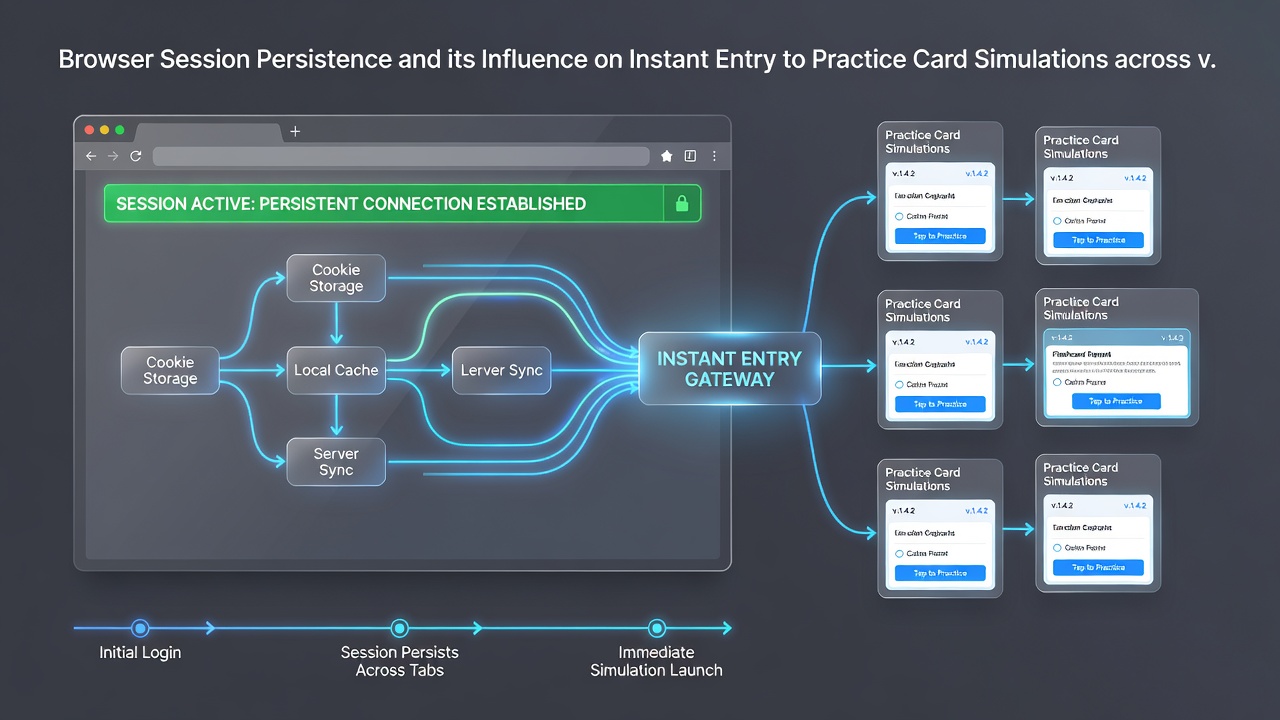
Developers also employ service workers in some cases to cache simulation assets locally, further accelerating load times when session data confirms a returning user. This combination of storage and caching creates seamless transitions that keep individuals engaged with practice card environments across repeated visits. Research indicates that platforms adopting these layered approaches experience higher retention rates for demo users who transition into repeated practice sessions.
Regulatory and Technical Considerations in 2026
Regulatory frameworks in regions such as the European Union and Australia have introduced guidelines on data storage durations that affect how long gaming sites may retain session information. These rules require clear disclosure of storage practices and user controls for clearing data. As a result, many platforms now include visible options for managing stored preferences while preserving the technical ability to deliver instant access. According to reports from the Australian Communications and Media Authority, compliant implementations have not reduced the speed advantages provided by session persistence. Meanwhile, browser vendors continue to refine APIs, with changes scheduled for late 2026 that will further standardize how first-party data persists across domains.
Future Developments in Session Handling
Emerging standards around partitioned storage and enhanced privacy protections are prompting gaming platforms to refine their approaches to session continuity. These updates aim to balance rapid entry into practice simulations with stricter controls on cross-site tracking. Industry analyses project that continued refinement of these mechanisms will sustain efficient access patterns while meeting evolving compliance requirements. Observers note that networks investing in updated storage strategies maintain competitive advantages in delivering immediate demo experiences to users.
Conclusion
Browser session persistence serves as a foundational element that enables virtual gaming platforms to provide direct routes into card practice simulations. Through coordinated use of storage APIs, caching strategies, and compliance with regional regulations, these systems reduce entry barriers and support consistent user access. As technical standards evolve through 2026 and beyond, platforms that adapt their persistence methods effectively will continue to shape how quickly individuals engage with demo environments across digital networks.